
One Tuesday morning, I randomly blurted an idea to my sister. What if, we walked to seven churches near our vicinity. I plotted the route in Google Maps and recited it. “We can start in Malate, then Ermita, then the two churches in Intramuros, cross the bridge to Binondo, then Santa Cruz. Maybe Paco can be the last one?” – reminding her that it really is not that necessarily for us to do it. We can just add it to the long list of my random thoughts that I verbally share. “It’s like a sort of Visita Iglesia.”
Living in a predominantly Roman Catholic country, Visita Iglesia is of the traditions observed during Lent – specifically on Maundy Thursday. After the Mass of the Lord’s Supper, Catholics visit seven churches to pray and reflect in front of the Eucharist or the Blessed Sacrament. Coming from a non-Roman Catholic family, we haven’t experienced it – only learning about it from television or maybe the internet?
The next evening, my sister said, “What if we actually do it? I think we can actually handle almost 10km of walking. And if we are up to it, we can add Quiapo to the list.”
The First Stop (0 km)
Around five in the morning, we headed to our first stop, The Church of Malate or Nuestra Senora de los Remedios (Our Lady of Remedies) Parish. Before we reached the church, we passed by a small shop selling pares or maybe goto. This reminded that Malate is known for its bustling nightlife – quite a contrast to our destination.
When we reached our first destination, we saw a few people standing in front of the church in prayer. We took a step back to the plaza across the street. The church exterior is said to have influences of both Mexican Baroque and Muslim designs.
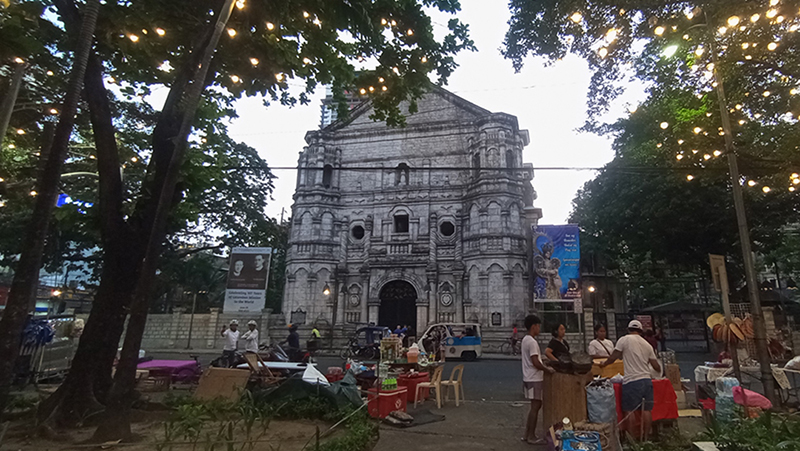
After taking a few pictures, we noticed a few booths set up in the plaza across the church – one of which sold bibingka. My sister, then, was reminded of her need for a quick breakfast. With that, we continued to the next church, which fortunately has a convenience store nearby.
+1.2 km
We inched our way along Del Pilar Street to head to the Archdiocesan Shrine of Nuestra Señora de Guia or the Ermita Church. Unlike the Malate Church, I don’t remember seeing the Ermita Church. There was a time when I mistook the one in Malate as the Ermita Church or that there isn’t one at all.
After nearly 10 blocks (not so big ones at that), we reached our second stop. For a building with a historical marker, it didn’t have the look of an old church. The Ermita Church, initially made of bamboo, mulawin and straw, has been rebuilt numerous times from earthquake damage. And with what I recall from my history classes, Manila was practically flattened during war time. The current structure is built on 1947 after the war.
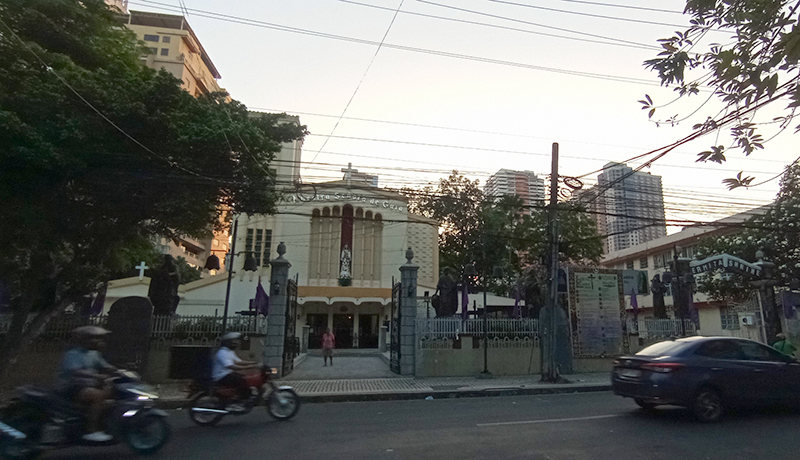
We stepped through the gates to look for the historical marker. I noticed crosses installed in a semicircle in the courtyard. Those were Stations of the Cross, fourteen images that commemorates the last day of Jesus Christ on before his crucifixion.
To get to the next two churches, we passed through Rizal Park and into the historic walled district, Intramuros.
+1.6 km
Our next stop, San Agustin Church, is one of the UNESCO Protected Baroque churches in the Philippines along with Nuestra Señora de la Asuncion in Santa Maria, Ilocos Sur, San Agustin Church in Paoay, Ilocos Norte ang the Santo Tomas de Villanueva Church in Miagao, Iloilo.
As we traversed along the now car-free General Luna Street, I was surprised to see the number of stalls selling variety of items – mostly food. It felt a bit more festive than solemn which is what I was expecting since Lent is considered a time for repentance and reflection.
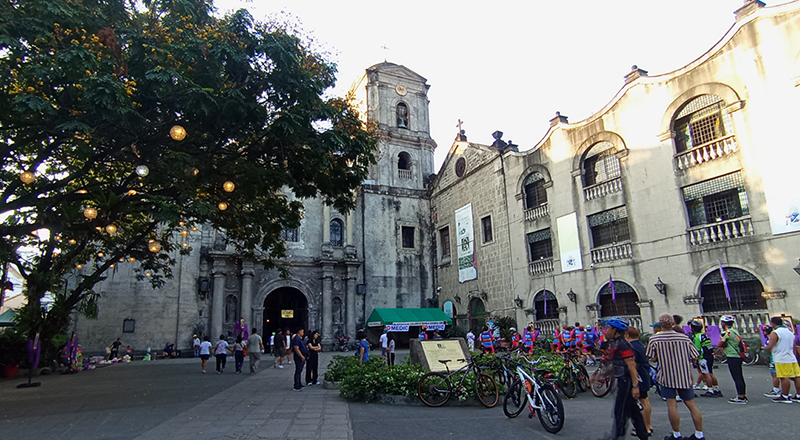
The church itself still has that quiet feel. But somehow the loudness of the surroundings had been a bit distracting for me.
+400 m
400 meters away from San Agustin Church is Minor Basilica and Metropolitan Cathedral of the Immaculate Conception more popularly referred to as The Manila Cathedral. Originally built in 1571, the church has been reconstructed eight times due to damage caused by earthquakes and war.
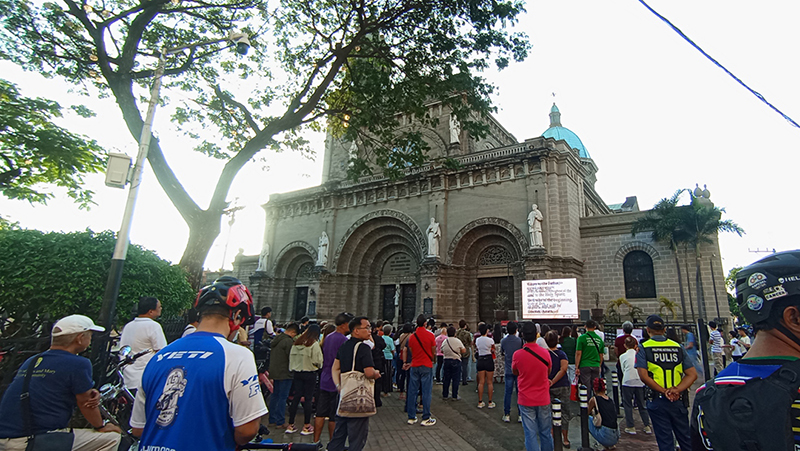
A huge crowd has gathered at the plaza as the mass was already ongoing when we reached the Manila Cathedral. The scene is what I actually thought of as what it would be like during Lent.
We took a little break by the fountain as we contemplated on which church across the Pasig River do we go to next. The sun is already out for quite some time and temperature is starting to be less comfortable. Ultimately, we decided to first head to the one in Santa Cruz.
+1.7 km
The Minor Basilica of Our Lady of the Pillar or the Archdiocesan Shrine of the Blessed Sacrament was initially built by the Jesuits in 1619. The current structure was made in 1957 with Spanish Baroque and Mission style and Art Deco and Romanesque-style interiors.
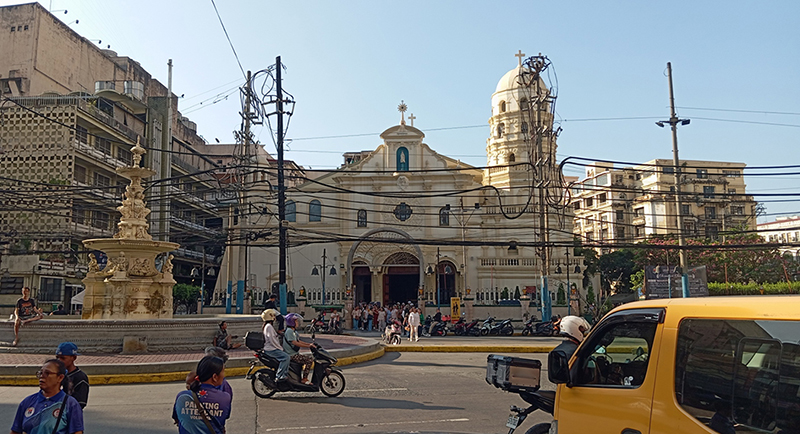
With the March sun blazing, we didn’t stay too long in Santa Cruz and just admired it from across the street.. At this point, we already spent around three hours, and the heat was starting to get to us.
+850 m
Passing under the Arch of Goodwill in Ongpin Street, we made our way to the Minor Basilica and National Shrine of Saint Lorenzo Ruiz or the Binondo Church. Also known as Our Lady of the Most Holy Rosary Parish, the church was founded by the Dominicans for the Chinese converts in the area. One distinct feature of this church is the bell tower which looks resembles an octagonal pagoda.
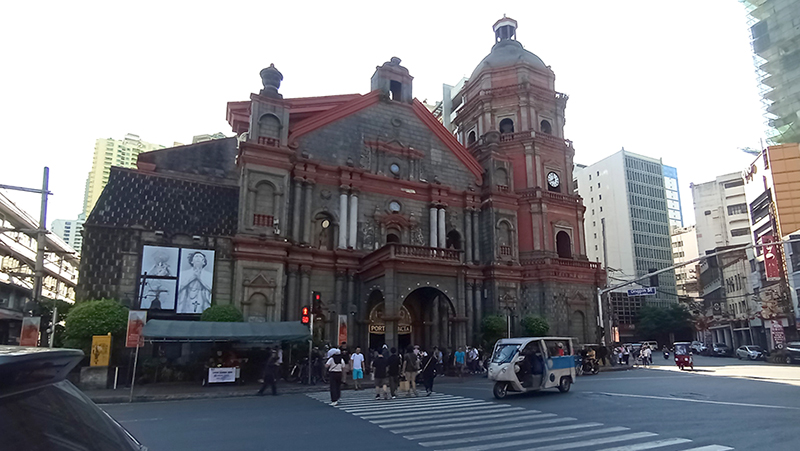
Like the other churches (except the San Agustin Church), Binondo Church has been reconstructed numerous times due to earthquakes and other calamities. Only the belfry remained from the original structure built in 1614.
+2 km
Before heading to the spot that will complete the 7, we decided to make a quick stop in Papa Kape. With that, we walked back to the Jones bridge, then strolled along the Pasig River Esplanade to get to Fort Santiago. I got myself a Bibingkaccino, while my sister had the Mango-Sampaloc Iced Tea. With drinks in tow, we decided to take a e-trike to get to the last stop.
+3.7km???? +300m
Not to be mistaken as Paco Church, the St. Pancratius Chapel is located in Paco Park, originally called Cementerio General de Dilao. The park was once a cemetery created due to the outbreak of cholera in Manila.
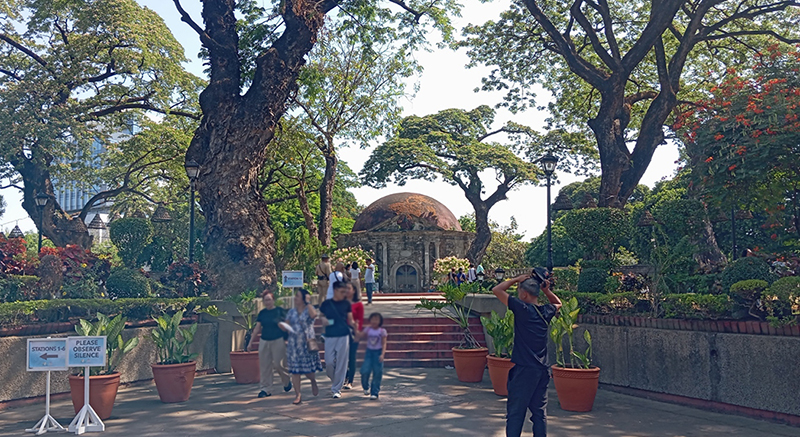
While it isn’t technically a church, we are still counting it. After all, we didn’t need to go technical for this. This is basically just a morning walk with a little sightseeing on the side.
From Malate and Ermita, to the walled district of Intramuros, across the Jones bridge to Santa Cruz and Binondo and back across the Pasig River to Paco – we walked around 8050 meters not including the distance to our home.
Looking back, I have read rather unpleasant remarks about our nation’s capital city. While it does seem to pale in comparison to some big cities on southeast Asia, there is a certain charm in discovering these little pockets of history. Sure, these churches reflected more of our colonial past, but that past is still part of what shaped the country to what it is in the present. Despite the gritty and chaotic vibes, this city still has its own kind of appeal. And I hope there is a way to improve on it.


Great post! Sakto, was at the Ermita Church last Sunday for Mass. Apparently, it’s slightly nearer to Robinsons Place Manila than the one at Malate — though the walk to UN Avenue LRT Station was rather scary as the stretch of road wasn’t quite well-lit.
LikeLiked by 1 person